Translate

Sunday, February 10, 2013

FILM REVIEW OF ''WARM BODIES" (2013)


When Hollywood started making zombie movies, filmmakers used voodoo as the means of controlling the dead.  The first genuine zombie flick, "White Zombie" (1932), featured Bela Lugosi of "Dracula" infamy as a sinister zombie master who owns a sugar cane plantation and exploits zombies as his labor force.  While most zombie movies were set in the West Indies, Hollywood didn't confine its sub-genre of the horror movie strictly to the Caribbean.  For example, "Revolt of the Zombies" took place in Cambodia.  Nevertheless, standard-issue zombie movies, such as "King of the Zombies" (1941), "I Walked with a Zombie" (1943), and "Zombies on Broadway" (1936), clung to the traditional Caribbean setting.  Meantime, "Revenge of the Zombies" (1943) occurred in Louisiana.  A fiendish Nazi scientist toiled to forge zombies to supplement the ranks of Hitler's Third Reich.  Occasionally, exceptions to the rule cropped up, like the first Caped Crusader serial "Batman" (1943) where a devilish Japanese spy on American soil converted individuals into mindless zombies by means of electricity. Apparently, nobody felt like experimenting drastically with the zombie formula, aside from relocating them beyond the West Indies.


Pittsburgh-based writer & director George A. Romero reimagined the zombie formula in 1968 with his classic chiller "Night of the Living Dead." Ironically, nothing like a global apocalypse had spawned zombies until Romero conjured up such a notion.  Romeo's zombie slayers aimed for the head when they shot zombies.  The next change came about courtesy of the Italian-made epic "Nightmare City" (1980) where zombies no longer lurched about but now ran like track superstars.  Aside from this minor formula tweaking, the biggest difference in post "Night of the Living Dead" zombie sagas has been the use of either an apocalypse or a virus to trigger an outbreak of zombie-mania. Just when you thought zombie films were stuck in a rut, Hollywood brought Seattle-based writer Isaac Marion's novel "Warm Bodies" to the screen, and movies about the undead will no longer will be the same. Simon and Schuster published the inventive book in 2010. 


"50/50" writer & director Jonathan Levine's adaptation of Marion's "Warm Bodies" is surprisingly captivating. A comparison between what occurs on screen and in Marion's book suggests Levine took minimal liberties with the source material.  This innovative makeover of a moribund genre takes matters beyond anything that either "Zombieland" or the "Resident Evil" franchise has tried in terms of permutation.  Basically, "Warm Bodies" takes zombie movies to the next level that gore-hound purists may not appreciate.  Levine doesn't pile up gratuitous amounts of blood and gore with shocking revelations to keep you stimulated.  Sure, zombies feed on the living, and they prefer the brain as an entrée. 


Nevertheless, Levine doesn't make a spectacle out of gut-munching for the sake of gut-munching. He obscures the feeding frenzy to accommodate a PG-13 rating.  First, the "Warm Bodies" zombies consume brains to experience the memories of those they've slain.  They just don't eat brains for no reason.  The idea you can derive knowledge from the consumption of an opponent's gray matter is fanciful.  Some cultures have argued eating the heart of an antagonist imparts strength to the victor.  Second, "Warm Bodies" has classified zombies as either good or bad.  Previously, all zombies were bad.  Creating a division between good and evil zombies endows the genre with greater sophistication.  In the "Warm Bodies" universe, bonies are the bad zombies.  Bonies are zombies who tear the skin off their bodies and resembled mummified skeletons. They move like lightning and they are treacherous.  They feast on the living as well as some of the dead. They are reminiscent of Ray Harryhausen's sword-wielding skeletons in the 1963 fantasy "Jason and the Argonauts."  Following Marion's lead, Levine has appropriated virtually everything else from the genre but cleverly has reconstituted the subject matter. 


Basically, Levine has synthesized the traditional zombie movie with a romantic comedy.  Like its literary source material, "Warm Bodies" makes allusions to Shakespeare's "Romeo and Juliet."  Indeed, there is even a brief balcony scene, though nothing like the Shakespeare version.  Our hero, a zombie known only as R (Nicholas Hoult of "X-Men: First Class") because he cannot remember his name, has spent most of the last eight years gnawing on humans.  When he doesn’t join his dead pals, like M (Rob Corddry), for group hunting trips, he enjoys his vinyl collection on a stereo in a derelict commercial jetliner.  You see, he holes up in an abandoned plane.  All the zombies congregate at the local airport.  Similarly, zombies in both George Romero's "Dawn of the Dead" (1978) and Zack Snyder's 2004 remake gravitated toward a shopping mall. After they became zombies, they were drawn by memories of the good times that they had had when they shopped together there.  Our lovesick zombie falls big-time for a young female zombie fighter, Julie (Teresa Palmer of "I Am Number Four"), after he chomps her boyfriend Perry’s brain.


Perry (David Franco), Julie, Nora (Analeigh Tipton), and others had left their heavily-fortified camp to scavenge the zombie infested outskirts of their fallen city for medical supplies.  When the zombies storm the medical supply room, R kills Perry, chews his brain, and feels smitten by Julie since he is seeing her from Perry’s perspective.  Incredibly, these sentiments of love reanimate his heart.  Now, R swears to protect Julie from the rest of his kind.  He escorts her back to his jetliner, and they grow to love each other.  According to this imaginative premise, biting into brains has the side effect of giving the undead a cerebral blast from the past.  If you shun run-of-the-mill zombie movies, "Warm Bodies" may change your attitude toward Z-pictures. This off-beat epic unites the living and the dead as allies in their collective war against the wicked bonies.  The happily ever after ending may curdle in the mouths of zombie purists. Nevertheless, "Warm Bodies" qualifies as the best thing that has happened to zombie movies since George A. Romero.


Sunday, February 3, 2013

A FILM REVIEW OF "BULLET TO THE HEAD" (2013)


Watching the Sylvester Stallone shoot’em up “Bullet to the Head” (**** OUT OF ****) felt like a blast from the past.  This polished but predictable anthology of action movie clichés contains several R-rated, close-quarters, combat scenes with sufficient amounts of blood splatter and gore; some high-octane, fireball explosions; lots of snappy tough guy banter; and surprising displays of frontal female nudity.  Half the scenes reminded me of producer Joel Silver’s explosive, slam-bang, white-knuckled, testosterone-laden tales, such as “Conspiracy Theory,” “Exit Wounds, “Swordfish,” and his “Lethal Weapon” franchise.  Indeed, Silver serves as one of the producers, and “Bullet to the Head” adheres to his formula.  Meanwhile, action auteur Walter Hill drew the other half from his hardboiled melodramas.  For the record, Hill helmed the two “48 Hrs” flicks with Nick Nolte and Eddie Murphy, “Extreme Prejudice” with Nick Nolte, “Last Man Standing” with Bruce Willis, and “Red Heat” co-starring Arnold Schwarzenegger and James Belushi.  Although “The Messenger” scenarist Alessandro Camon adapted the Alexis Nolent graphic novel "Du plomb dans la tête,” “Bullet to the Head” looks like “48 Hrs” and/or “Red Heat” clone.  Mind you, “Bullet to the Head” is Hill’s first theatrical release since his gritty 2002 prison melodrama “Undisputed” with Ving Rhames and Wesley Snipes.  During his absence from the big screen, Hill helmed the premiere episode of HBO’s “Deadwood,” and then the television mini-series western “Broken Trail” (2006) costarring Robert Duvall and Thomas Haden Church.”  In many respects, this action-packed, largely straightforward, odd couple buddy picture compares favorably with earlier, exceptional Stallone sagas like “Assassins,” “The Specialist,” and “Demolition Man.”  Most definitely, it surpasses “Tango and Cash” and “Stop, Or My Mom Will Shoot.”

Cast as a seasoned hit-man in the Crescent City, Sylvester Stallone tangles with a mysterious cabal of Big Easy investors who have the New Orleans Police Department on their payroll.  Director Walter Hill has juggled the occupations of the protagonists from his earlier buddy picture epics.  The cop was always the lead in the combo in the “48 Hrs” movies and “Red Heat.”  This time around, world-weary, career criminal James “Bobo” Bonomo (Sylvester Stallone of “Rocky”) is the lead, while saintly, Washington, D.C. Detective Taylor Kwon (Sung Kang of “Fast & Furious”) behaves rather naively and relies too much on his cell phone.  Ironically, the two men want to exact vengeance for the deaths of their former partners.  They agree to form an uneasy alliance, but Kwon’s conscience prompts him to constrain Bonomo. These two don’t immediately run into each other. When the plot unfolds, Bonomo and his partner Louis Blanchard (Jon Seda of “Bad Boys 2”) masquerade as cops to snuff a cocaine-snorting thug, Hank Greely (Holt McCallany of “Fight Club”), in a motel room.  Bonomo spots a tattooed prostitute cowering in the shower, but he lets her live.  This amoral murderer draws the line at shooting women.  When he is behind the wheel on the road, he swerves to avoid stray cats in front of him.  “It’s bad luck,” he assures Louis.  These two show up at a crowded bar where they are supposed to pick up the balance of their loot for the shooting.  Before either realizes they have been double-crossed, another assassin, Keegan (Jason Momoa of “Conan”), stabs poor Louis repeatedly to death in front of everybody.  He wields a small blade to hack both of Louis’ lungs so nobody in the noisy bar knows a murder has occurred.  Keegan isn’t quite as lucky with Bonomo.  Now, Bonomo wants payback.  Our hero crosses paths with a hard-nosed, Washington, D.C. police detective who is visiting New Orleans.  As it turns out, Hank Greely was his former partner in Washington.  Kwon wants the people who ordered Hank’s demise.  Sure, neither Bonomo nor Kwon have much use for each other initially, but they kind of grow on one other as they survive back-to-back fracases. 

Hill stages some gripping shoot-out scenes that genre fans will savor, and you get to see Silver's trademark Ka-Boom explosions!  Hill never lets the narrative bog down in aimless chatter or an over elaborate plot.  Stallone’s character provides deadpan narration throughout the pyrotechnics so you never take anything seriously in “Bullet to the Head.”  “Bullet to the Head” is not unlike a Tarantino thriller.  Camon and Hill wrap up everything, but leave room for a sequel since the hero’s daughter and the D.C. cop are dating.  At 66 years of age, Sylvester Stallone appears as fit as a fiddle.  This is the kind of movie where guys shed shirts and clash muscles.  He channels a little bit of “Rocky” in his tongue-in-cheek performance.  The ax fight between beefy, muscle-bound Jason Momoa and Stallone has been carefully edited to present both to maximum advantage.  You know Stallone is going to triumph, but Momoa doesn’t make it look easy.  Momoa makes a lusty villain.  No less villainous is Adewale Akinnuoye-Agbaje as a crippled, African investor has no qualms about murder.  Christian Slater appears briefly as a smarmy swindler with a flash drive around his neck that boasts the goods of everybody.  The interrogation scene is pretty amusing.  Clocking in at a lean, mean, 97 minutes, “Bullet to the Head” doesn’t wear out its welcome.  You don’t even have to wait around to see what’s after the end credits so you can clear out early.  Were it not for the pedigree talent involved, “Bullet to the Head” would qualify at best as a three-star rather than a four-star movie.  If you still like Stallone, you'll love "Bullet to the Head" because it is worth shelling out the bucks to watch this Spartan saga.

Sunday, January 27, 2013

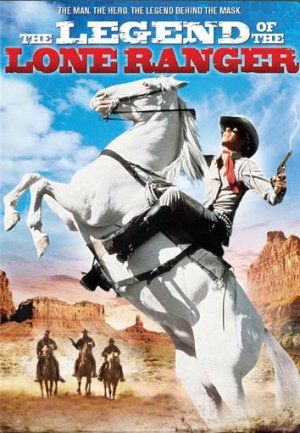
FILM REVIEW OF "THE LEGEND OF THE LONE RANGER (1981)


Scenic locales, gorgeous cinematography, superb set design, atmospheric art direction, and a first-class supporting cast cannot salvage "Monte Walsh" director William A. Fraker's lame western "The Legend of the Lone Ranger" with a impassive Klinton Spilsbury cast as the Masked Man. Spilsbury is a tall, lean gent with a strong chin and a dashing profile. In other words, he would have made a great Marlboro Man, but he conveys no sense of presence. Not only is this western an origins epic establishing the genesis of the Lone Ranger, but it is also an abduction opus since the hero must rescue President Ulysses S. Grant from the villainous Major Bartholomew 'Butch' Cavendish (Christopher Lloyd of "Back to the Future") who attacks his train. You would think President Grant would have surrounded himself with an army of soldiers as his bodyguards, but they are nowhere to be seen.
The Legend of the Lone Ranger

 When we get our first glimpse of the Lone Ranger, John Reid is an adolescent who saves a young Tonto from a gang of ruthless ruffians. No sooner has young Reid saved Tonto from these villains than he scrambles back to his home to find these same dastards attacking his ranch. They gun down both his mother and father in cold blood, and later his big brother packs him off to Detroit. Of course, Detroit would be the perfect place since the original "Lone Ranger" radio series aired there on WXYZ in the first place in 1933. Later, after he has grown up and graduated from law school, he visits his brother, Captain Dan Reid (John Bennett Perry of "Independence Day"),and they ride off in pursuit of the gunmen who hanged a crusading newspaper publisher (John Hart of "The Lone Ranger") in the dusty town of Del Rio, Texas. It seems that Lucas Striker has printed some unkind words about Cavendish, and he repays the favor by dispatching his hooligans to slip a noose around his neck.
The ambush at Bryant's Gap—one of the few events that distinguish this horse opera-- is staged with gusto. Cavendish's men launch wagons laden with explosives off promontories at either end of the gap and cut the Rangers off from escaping while his army of riflemen massacre them. They use a Gatling gun to mow down the poor lawmen. In this version of the legend, Cavendish is no longer an ordinary outlaw but a former U.S. Army officer court-marshaled by Grant. Cavendish plans to establish his own kingdom in Texas and intends to use Grant as his bargaining chip to realize his dream. Christopher Lloyd plays Cavendish as a tight-lipped martinet, and he does some strange things himself. When he orders the execution of two of his henchmen (Ted Gehring and Buck Taylor of TV's "Gunsmoke"), he has them blindfolded and seated in chairs before a firing squad. Believe it or not, one of Cavendish's other henchmen is portrayed by no less than Tom Laughlin of "Billy Jack" fame.

THE LEGEND OF THE LONE RANGER, from left: Michael Horse, Kointon Spilsbury, 1981. ©Universal Pictures 

This 98-minute horse opera perished at the box office partially because of an ill-fated public relations campaign that stripped the original Lone Ranger--Clayton Moore--of his mask. After he finished making "The Lone Ranger and the Lost City of God," Moore appeared in various commercials with sidekick Jay Silverheels and attended movie conventions where he signed autographs. The was the primary way that the former Masked Man generated revenue for himself and his family in his later years. Something must have gone wrong in the process of making the movie because the producers used John Hart, who took over the role momentarily after a contract dispute. Particularly objectionable is the reliance upon a balladeer (country singer Merle Haggard) to provide musical narration that serves no purpose. We know everything that we need to know and then here comes Merle underlining what we already know.  


The problems with the script are numerous. A relationship between John Reed and Amy Striker has its moments when they swap spit, but it goes no farther. Instead of the outlaws killing Amy's father, they should have killed her accidentally when she got in their way. This would have ended the romance and given the Lone Ranger another reason to ride the back trails for justice. The scene where the Masked Man gallops alone into Del Rio to rescue Tonto from a hangman's noose is inferior. He faces little opposition from the townspeople. Although the finale with the Lone Ranger and Tonto infiltrating Cavendish hidden fort turns out to explosive stuff, this entire scene makes it too easy for our heroes who encounter no trouble. The screenplay includes historical figures such as Buffalo Bill Cody, Wild Bill Hickok, and General George A. Custer. Jason Robards is good as Grant, but the story is formulaic. 

If you didn't know any better, "The Legend of the Lone Ranger" might make a tolerable rainy day movie. Michael Horse plays Tonto, but the two generate little sense of camaraderie. "Your sins will be paid for in the fires of hell," proclaims Grant when he sentences Cavendish to prison. He could have been the idiots who took away Clayton Moore's mask and came up with this oater. Stacy Keach's younger brother James dubbed Klinton Spilsbury's dialogue, but not even he can cry "Hi, Yo-Silver" with any enthusiasm. I grew up watching Clayton Moore and Jay Silverheels ride across the small screen as well as the big screen in "The Lone Ranger" and "The Lone Ranger and the Lost City of Gold," and both of these outings surpass this technically elegant looking sagebrusher. The DVD release of this inferior western is just as lame because it is presented in the Pan & Scan format until the end credits roll and the images appear in widescreen letterb0xed format. 


FILM REVIEW OF ''PARKER" (2013)


The brawny Jason Statham crime thriller “Parker”(*** OUT OF ****) qualifies as uneven but entertaining.  Too many characters converge in this above-average revenge melodrama.  Hispanic diva Jennifer Lopez plays one of those extraneous characters in “Black Swan” scenarist John J. McLaughlin’s flawed screenplay.  Cast as a divorced, debt-ridden, real estate agent, Lopez never gets intimate with her rugged “Transporter” star.  Instead, she is stuck in a supporting role and lends only minimal sizzle to “Blood In, Blood Out” director Taylor Hackford’s otherwise high-octane actioneer.  In one scene, she strips to her undies for our suspicious protagonist to see if she is wearing a wire.  Meantime, our hero has somebody else, in an even smaller role, who attends to him after he’s been shot, stabbed and beaten up.  Nevertheless, when Lopez isn’t chauffeuring Statham around scenic Palm Beach, Florida, she is meddling with his carefully laid plans the same way Lucille Ball used to interfere with his Cuban band-leader husband’s nightclub show in the “I Love Lucy” television comedy.  This energetic R-rated epic follows the exploits of a tough-as-nails professional criminal named Parker who lives by a strict code of ethics that reflects his principles.  He doesn’t harm anybody who doesn’t ask for it, but robbery is still his bread and butter.  When an armed guard nearly succumbs to a heart attack, Parker calms him down while he steals from him.


Statham isn’t the first actor to incarnate Parker.  If you’re counting, “Parker” marks the sixth time Hollywood has adapted the late Donald E. Westlake’s crime novel that he penned under the pseudonym Richard Stark.  Initially, French New Wave director Jean-Luc Godard changed the sex of the role for actress Anna Karina who played Paula in “Made in USA” in 1966.  Lee Marvin took a bullet as the same character with the name Walker in director John Boorman’s violent shoot’em up saga “Point Blank” in 1967.  Jim Brown played him as McClain in director Gordon Flemyng’s account of a hardboiled hold-up in “The Split” in 1968.  Robert Duvall landed the role as Macklin in director John Flynn’s “The Outfit” in 1973.  Finally, Mel Gibson appropriated the part as Porter in director Brian Helgeland’s gritty, bullet-riddled “Payback” (1999).  If you haven’t seen these previous adaptations hardboiled melodramas, you should put them on your wish list.  
“Parker” opens with an explosive heist at the Ohio State Fair.  Parker (Jason Statham of “Safe”) supervises an elaborate heist with four partners with whom he has no history.  This quartet masquerades as either clowns or cops, while he dons the collar of a clergyman.  They plunder the concession booth and make off with hundreds of thousands of dollars.  A case of arson designed to distract the authorities so the gang can make a quiet getaway concludes with the tragic death of an innocent bystander.  No sooner has this criminal quintet fled with their ill-gotten gains than Melander (Michael Chiklis of “The Fantastic Four”) insists Parker chip in his share of the loot so they can finance a $50-million haul in Palm Beach, Florida.  Naturally, since our hero doesn’t trust his accomplices, he refuses to join them.  Melander pulls a gun on Parker, and they careen recklessly down a public highway trying to control Parker.  Parker beats them up and then bails out the window.  He slams into the asphalt and lays there stunned.  August (Micah A. Hauptman of “S.W.A.T.: Firefight”) shoots him once and disposes of his bloody corpse into a ditch.  Miraculously, Parker survives this near-death ordeal and lucks up when a family stops to help him out.  Our hero awakens in a hospital as the police are making inquiries about him.  Cleverly, he manages to elude them despite both  the trauma and his gunshot wound.  He tracks Melander and his trigger-happy goons down to sunny Palm Beach, Florida.  Parker’s escape from the hospital and his improvised methods for boosting cars and getting cash-on-the-run are fascinating stuff.  Not long after Parker arrives in Florida, he hooks up with Lesley (Jennifer Lopez of “Enough”) and uses her to find where his ex-partners are holed up in an elite population.  “Parker” loses momentum at this juncture before it recovers with a suspense confrontation between our amoral hero and the dastardly quartet of hoods.  


Despite the alluring attraction she provides, Jennifer Lopez could have been deleted entirely from "Parker."  After all, what is the point of having a looker like Lopez if she is not the hero’s romantic interest?  Meantime, Hackford and McLaughlin confine Parker’s girlfriend Claire (Emma Booth) to the periphery with little to do aside from fleeing from his assailants and nursing our hero’s wounds.  She doesn’t have enough time to make much of an impression.  Michael Chiklis, Clifton Collins Jr., Wendell Pierce, and Micah A. Hauptman are thoroughly convincingly as ruthless criminals who leave Statham for dead on a road with a bullet in him.  Unfortunately, we don’t learn much about these thugs since Hackford and McLaughlin concentrate on the plight of Lopez’ hard luck character.  Looking way past his prime as Statham’s mentor, Nick Nolte spends most of his time growling his lines of dialogue as if he were recovering from a hangover.  One of the best close quarter’s combat scenes pits Statham against Swiss actor Daniel Bernhardt, who replaced Jean-Claude Van Damme in the “Bloodsport” franchise.  For the record, Statham and Bernhardt performed their own stunts in a knock-down, drag-out, brawl.  This bruising man-to-man knife and fistfight qualifies as one of the highlights of “Parker.”  Clocking in at just shy of two hours, “Parker” could have been leaner and meaner had either Lopez’s scenes been trimmed or the two women had been merged into one.  Nevertheless, die-hard Statham fans will enjoy the white-knuckled shenanigans in this muscular melodrama.